Best evening default
Warm amber or red
Use warmer, dimmer light in the last hour before bed when the goal is to signal that the day is ending.
 Zen Strength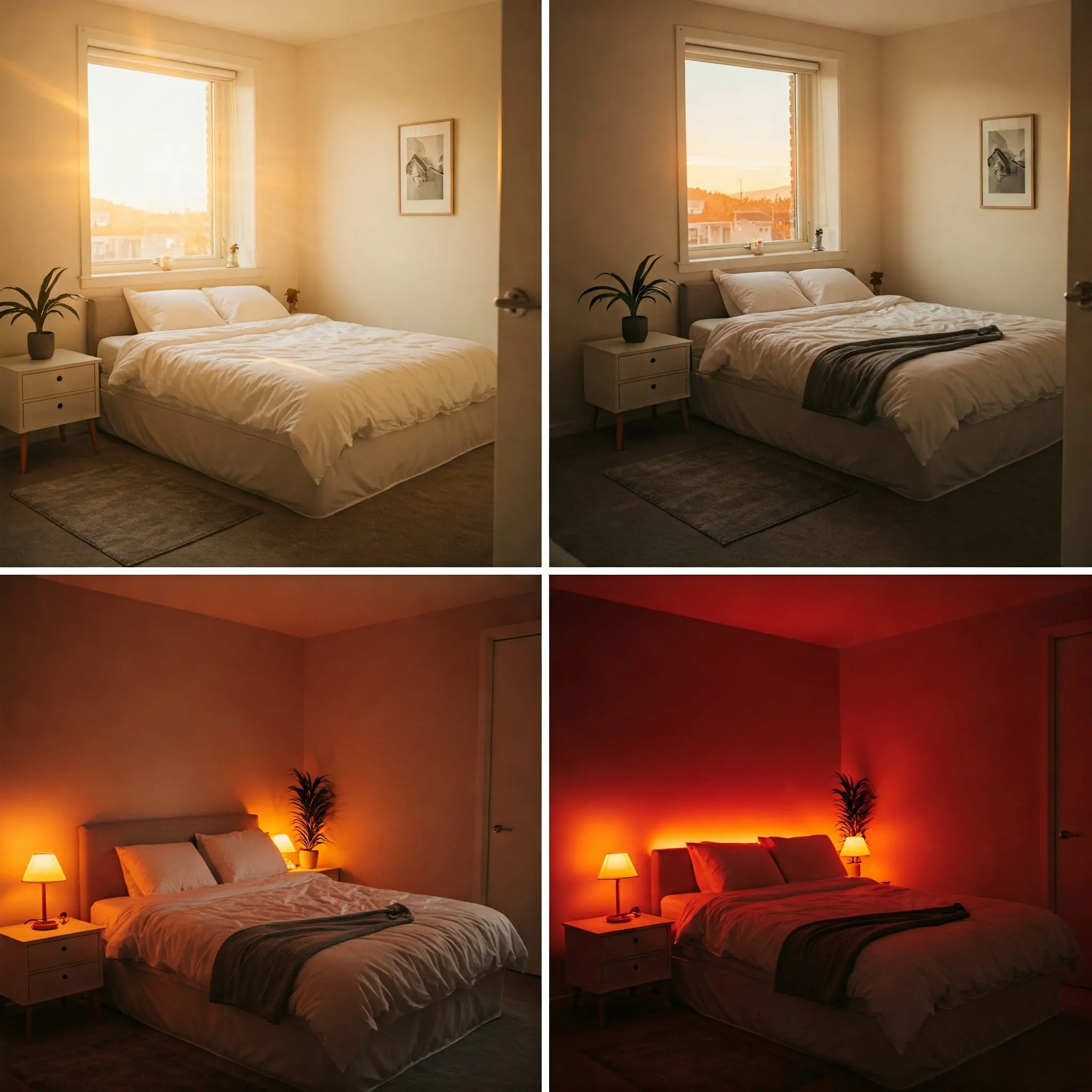
Sleep light guide
Light is not just decor at night. It is a signal. Use warmer, dimmer light to make sleep less of a negotiation with your nervous system.
Simple rule
The sleep mistake is usually not the exact hue. It is too much light, too late, too close to your eyes, while your mind is still taking in tasks, messages, and decisions.
Make the last hour visually quieter. That gives breathing practices and recovery routines a better chance to work.
Best evening default
Use warmer, dimmer light in the last hour before bed when the goal is to signal that the day is ending.
Best practical compromise
Good for kitchens, bathrooms, and shared rooms when pure red light is not realistic but bright blue-white light is too stimulating.
Best kept for daytime
Useful when you need alertness earlier in the day. At night, keep it off your face and out of your bedroom routine.

Evening protocol
When light is not enough
Light hygiene is a useful lever, but it will not solve every sleep problem. If you keep waking unrefreshed, crashing in the afternoon, or using stimulation to get through the day, the bigger question is recovery capacity.
FAQ
Warm amber, orange, or red light is usually the best evening choice because it is less alerting than bright blue-white light. Brightness and timing still matter, so dim the light as well.
No. A dim warm lamp, warmer phone settings, and less overhead light are usually enough to start. Specialty lights can help, but the routine matters more than the product.
Not usually. Light can support your circadian rhythm, but persistent sleep problems may also involve stress load, breathing, caffeine, schedule, medical factors, or anxiety.
If poor sleep keeps repeating despite basic light hygiene, use a broader assessment. Zen Strength can help with breath, energy, and recovery patterns, but it is not medical care.
Next step
Start with warmer light and a simple breathing practice. If sleep and energy are still inconsistent, use an assessment to choose the right reset.