
Chiang Mai room health
Mold, Humidity, Sleep & Indoor Air
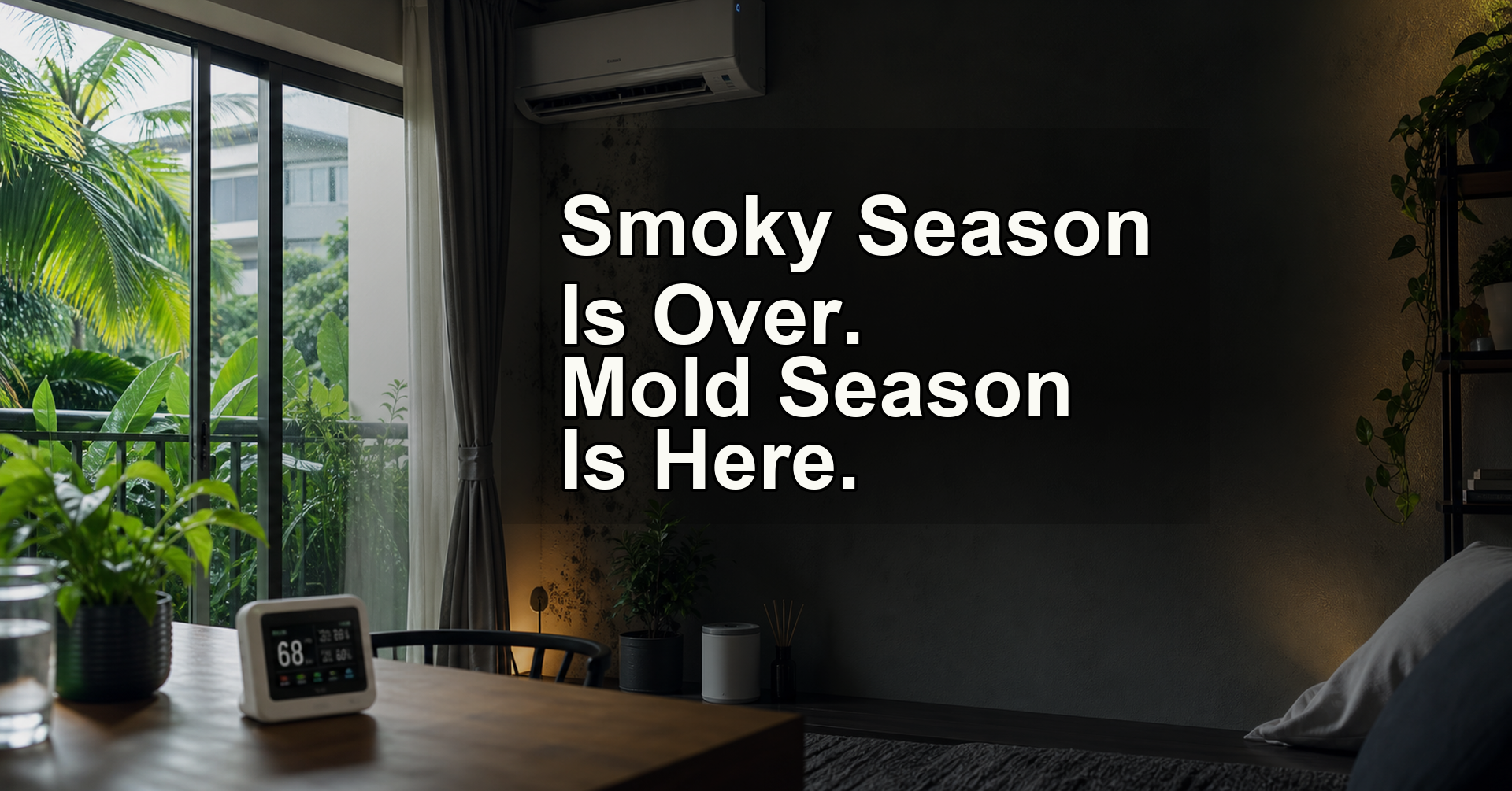
Rainy season changes the room around you. If your sleep, breathing, morning energy, or mental clarity changes with it, measure the environment before buying another supplement.
Start here
Measure before you guess.
My first question is simple: do you feel or sleep differently somewhere else? A change away from home is a clue, not proof that mold is the cause.
- Measure humidity. Check before bed, on waking, inside closets, and behind furniture. The US EPA recommends keeping indoor relative humidity below 60%, ideally between 30% and 50% when feasible.
- Look for moisture. Check leaks, condensation, musty smells, the visible parts of the air conditioner, mattress and bed base, curtains, rugs, walls, and porous furniture.
- Change one variable. Test dry mode, a dehumidifier, an air-conditioner cleaning, removal of a damp item, or a HEPA air purifier. Track the room reading alongside sleep quality and morning energy.
An air purifier can reduce airborne particles. It cannot repair a leak, dry wet material, or remove growth from a surface. Fix the moisture source first.
Practical reference: US EPA indoor-air guidance.
Resource library
The complete guide is being assembled.
The live slideshow is available now. I am preparing the event video, an audio version, research links, Chiang Mai services, and the full seven-day room experiment for this page.
Humidity decisions, room audit, AC checks, cleanup boundaries, and a seven-day experiment.
The recorded July 14 presentation and discussion.
A listening version with the most useful links and local resources.
Run the next experiment
Health changes faster when the room can compare notes.
Join the Zuzalu Longevity community for upcoming Chiang Mai events and practical group experiments around sleep, food, movement, environment, and recovery.
Join the Community