Breathe in for 5, out for 5.
Coherence breathing
Use this when you want a steady rhythm that is easy to repeat without counting too hard.
 Zen Strength
Breathing exercises for anxiety
Breathwork for anxiety is not about forcing calm. It is about creating enough rhythm, safety, and control that your nervous system has another option.
First principle
Anxiety can make breathing feel tight, fast, shallow, or overcontrolled. That does not mean you are doing something wrong. It means the practice needs to be simple enough for the state you are in.
Start with low intensity. If counting makes you more tense, orient to the room first, then let the breath become slower once your body has more context.
Breathe in for 5, out for 5.
Use this when you want a steady rhythm that is easy to repeat without counting too hard.
Breathe in for 4, out for 6-8.
Use this when anxiety feels like acceleration and you need a clearer downshift.
Look around, name what is safe, then breathe slowly.
Use this when focusing directly on the breath makes you more anxious at first.
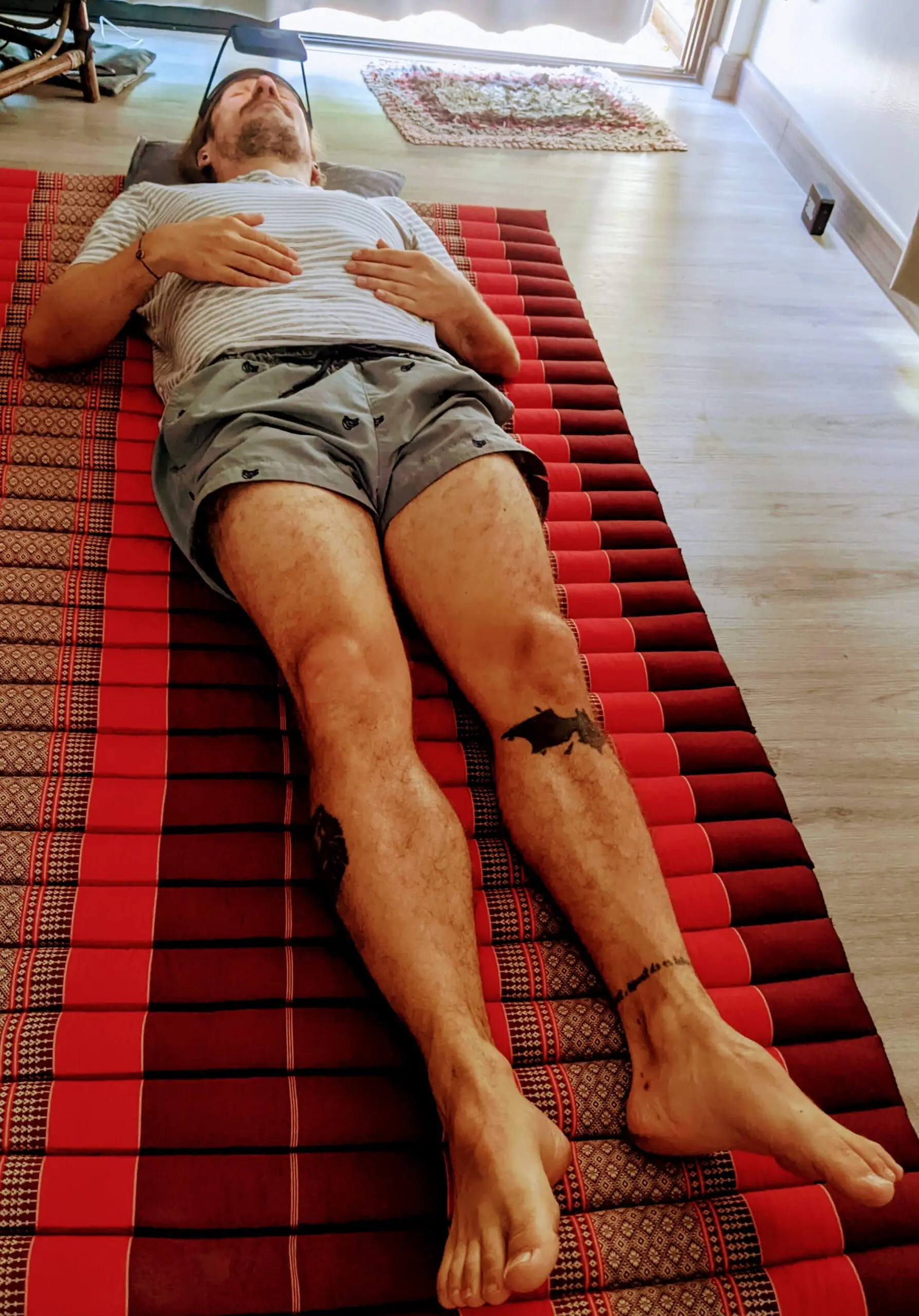
Use it in real life
A breathing practice becomes useful when your body recognizes it. Train the pattern when you are only mildly stressed, then use a lighter version when pressure rises.
If anxiety is intense, unfamiliar, or linked to trauma, medication, panic symptoms, or medical concerns, use qualified support. Breathwork should be scaled to the person, not forced.
Put one breathing cue where anxiety usually starts: desk, phone lock screen, or bedside.
Pair the breath with feet on the ground, relaxed jaw, and slower eyes.
Use the same cue for two weeks before adding more techniques.
Deeper support
The Breath & Energy Assessment helps identify which breathwork lane is most useful for your current state: downshifting, energy, recovery, emotional processing, or a longer reset.
FAQ
Start with coherence breathing or a longer exhale. The best exercise is the one you can repeat gently when anxiety starts, not the most intense technique.
Open your eyes, orient to the room, feel your feet or the chair, and make the breath smaller. You can regulate through attention and environment before counting breaths.
No. Strong breathwork, long holds, or forceful breathing can increase sensation. During a spike, choose low-intensity breathing and seek qualified help when symptoms are severe or unfamiliar.
Zen Strength can help you build breath awareness, stress regulation, and nervous-system practices. It is not a substitute for medical care, diagnosis, psychotherapy, or crisis support.
Next step
Use the simple practice today. If you want guided support, start with a 1:1 assessment or join an in-person Zen Strength Experience in Chiang Mai.